Ashtanga
Mysore style, taught with hands-on adjustment
About
He did not want to do yoga. He wanted to be able to sit still, and his body would not let him.
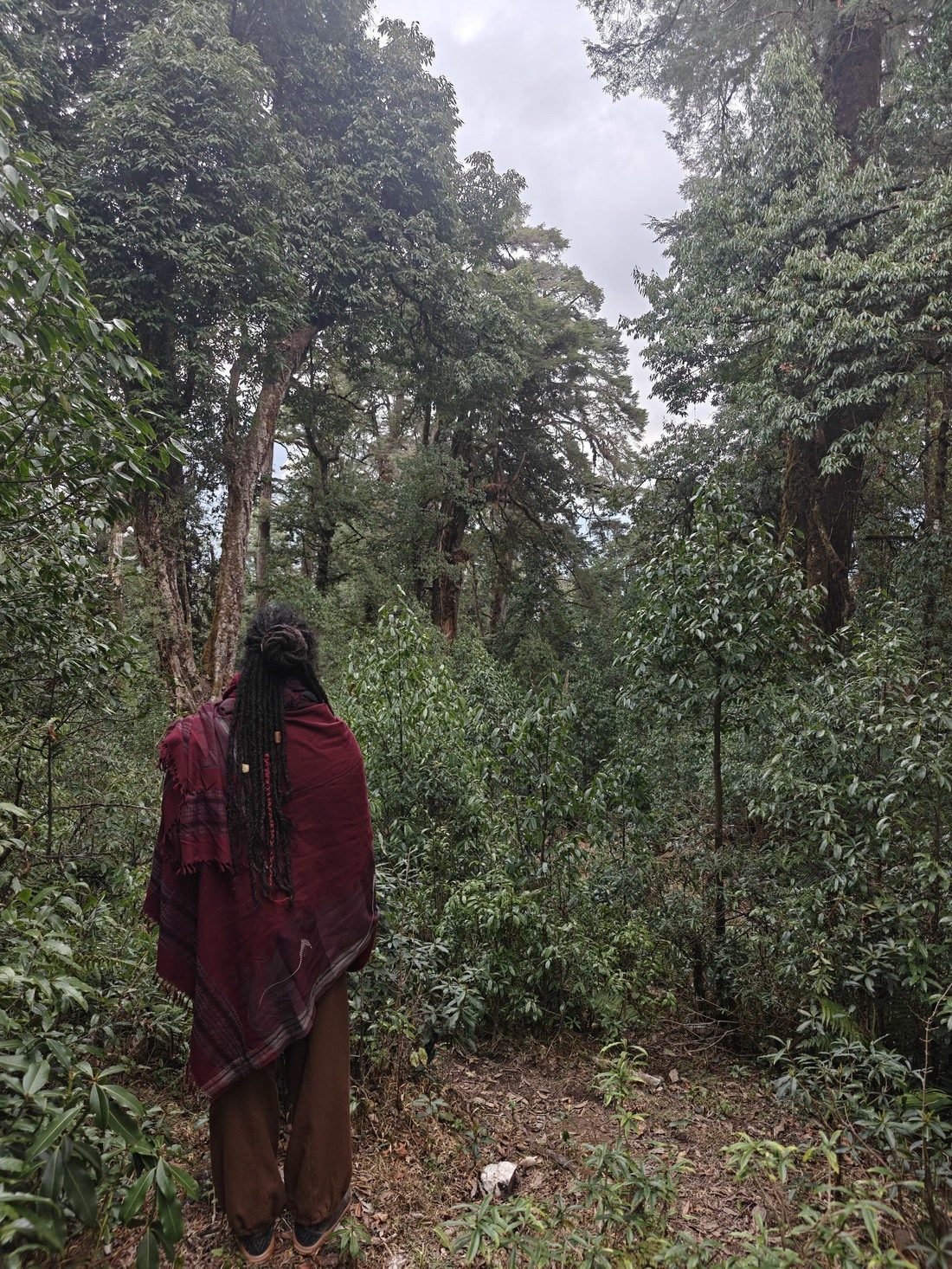
Where it started
Jata grew up in the Palestinian ghettos of Europe, in a broken home, among what he calls broken people. Running from the police was a weekly thing. Fights. Hurting people, hurting himself.
At some point he worked out that waiting for the world to improve was not a plan. The conditions were not going to get better, so the only thing left to change was how he met them.
«The only way to really make a change is to change myself, rather than trying to change the external world.»
The reluctant beginning
What he actually wanted was meditation. Mental quiet. But he could not sit: could not reach the ground cross legged, could not hold his spine straight. Yoga was the workaround, not the goal.
So he hid it. He practised behind a locked door, from videos he downloaded and then buried in his files so nobody would find them. His friends laughed at the idea. In his telling it was something only women did, and every class hurt.
He kept going anyway, for six years, because it was making sitting possible.
«The first six years I practised yoga, I hated it. Every class I hated it. I just went because I knew it was good for me.»
The turn
He trained as a physiotherapist, wanting a natural way to help people. What he found was mechanical: electrotherapy, lasers, machines, a knee treated the way a mechanic treats a broken part.
Somewhere in that training the comparison landed. The things Western physiotherapy was arriving at, the yogis had worked out a very long time ago. So he stopped, and went back to the practice he had spent six years resenting.
That is why he describes what he does as yoga therapy rather than yoga teaching. The Eastern view he works from is that the body heals itself and his job is to allow it, not to fix it from the outside.
«This yoga I have been practising is way superior. The things physiotherapy is only discovering now were discovered thousands of years ago by the yogis.»
The search
He started alone with downloaded videos, moved to gyms, then to studios in Copenhagen. The first was a school that stripped the spiritual content out and kept the exercise. It was good practice, and it was not what he was looking for.
Then India, most years since he began. He worked through the big schools one by one and found almost all of them too commercial to trust. Ashtanga was the one that held.
Not because it is pure. He is clear that it is not. Because it is the most faithful version of the thing that still exists, and because it has survived long enough to have proved itself.
«There is something about tradition that makes sense to me. When something has survived the test of time.»
The reading
Patanjali's Yoga Sutras, the Bhagavad Gita, the Upanishads, the Vedic texts. He returns to them to remind himself what the technique is actually for.
His view is that the postures and the breath are only ever the method, and the reasoning behind them lives in the philosophy. He says he does not know another yoga teacher who reads the scriptures.
«When we are doing yoga it is not about the poses, it is not about the breath. That is only the technique.»
What he teaches
Mysore style Ashtanga three mornings a week, gentle Hatha on Wednesdays, and a restorative class for men on Saturdays. One to one, Thai yoga massage and holistic physiotherapy. And a balm he makes by hand.
Mysore style, taught with hands-on adjustment
Slower, held postures with attention to breath
Yoga, acupressure and assisted stretching
One to one, for pain and restricted movement
Partner work and counterbalance, taught in workshops
Classes run at Prana Space, Yanbu' Street 2, Um Uthaina, Amman.